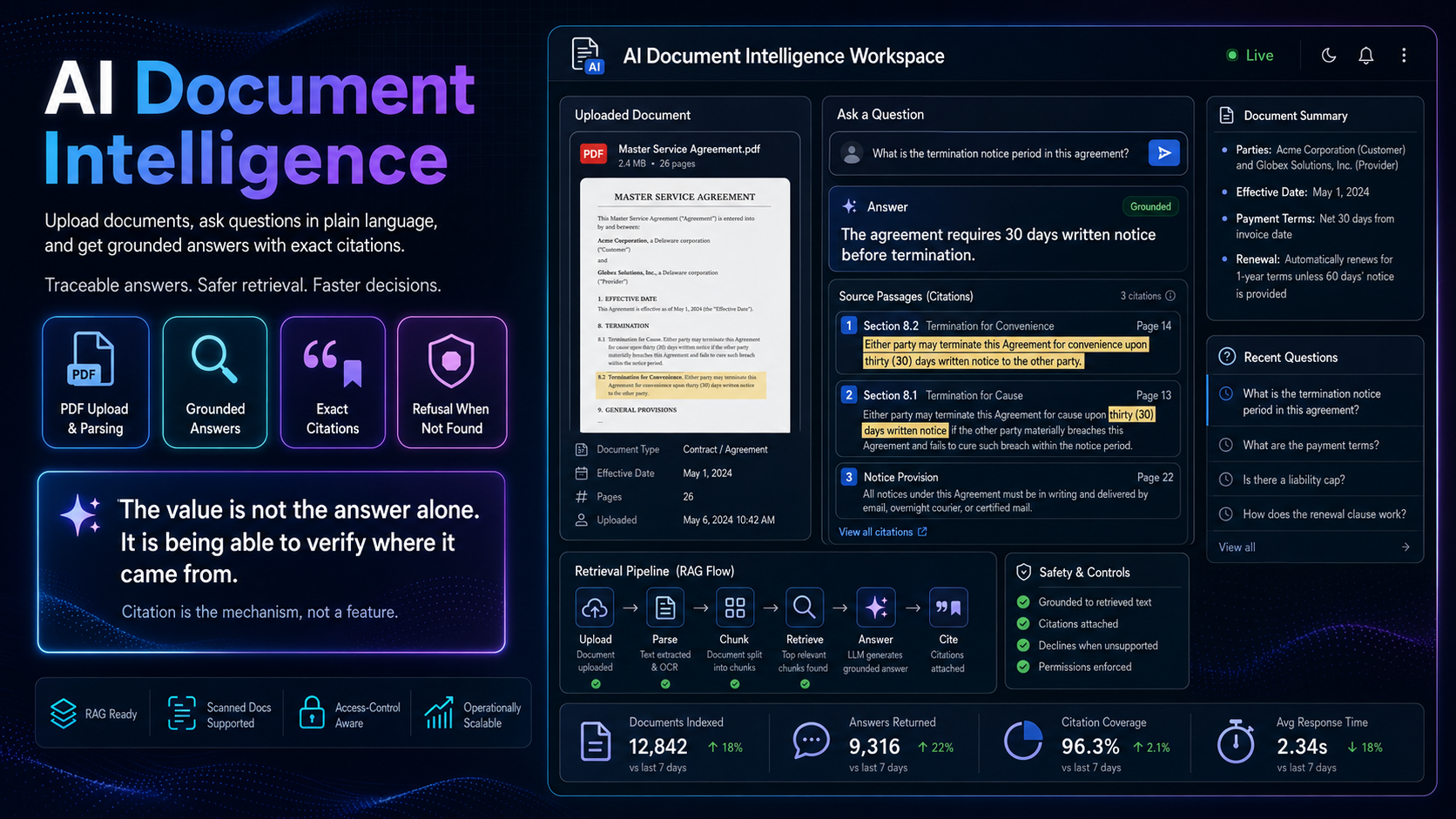
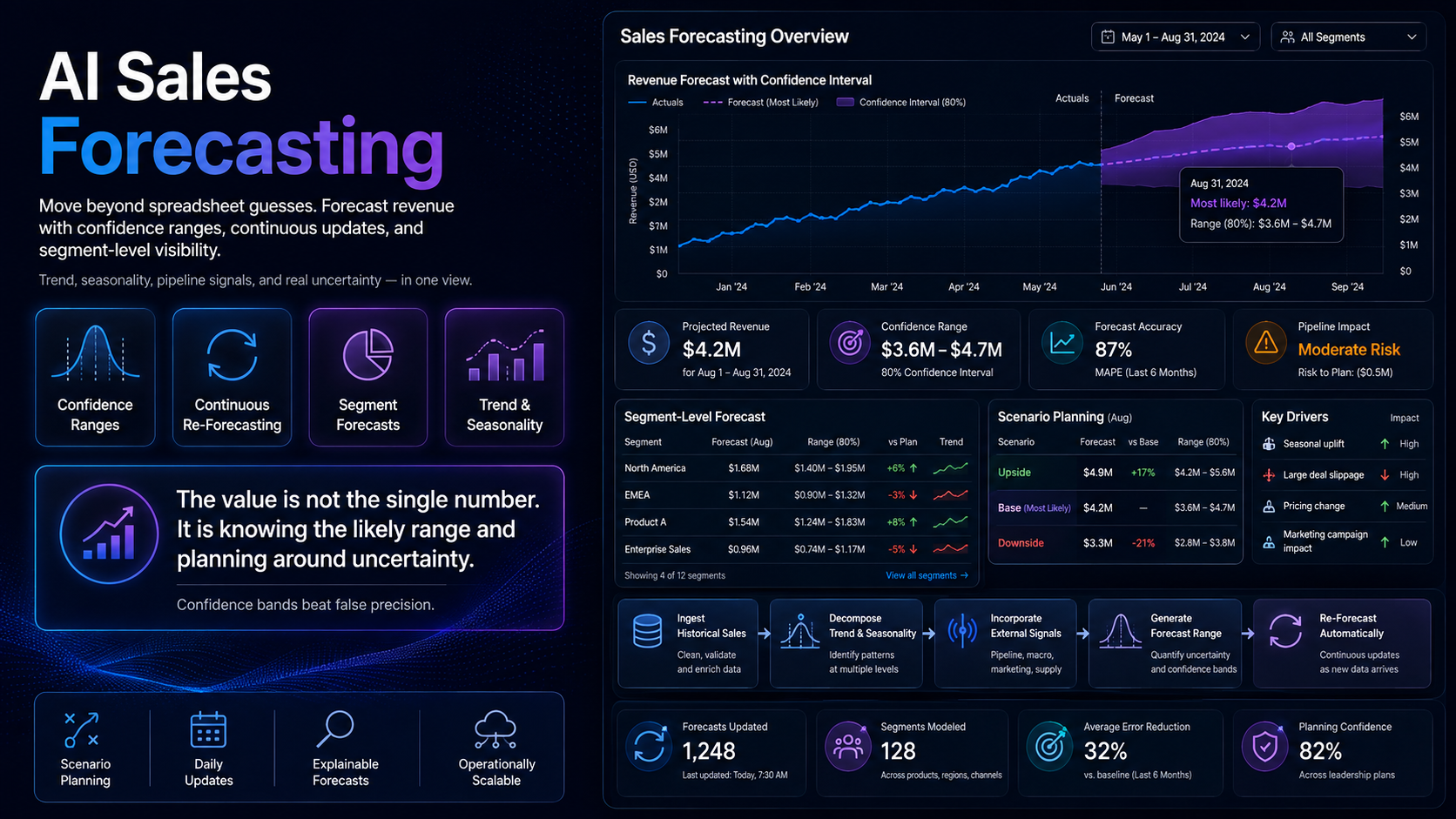
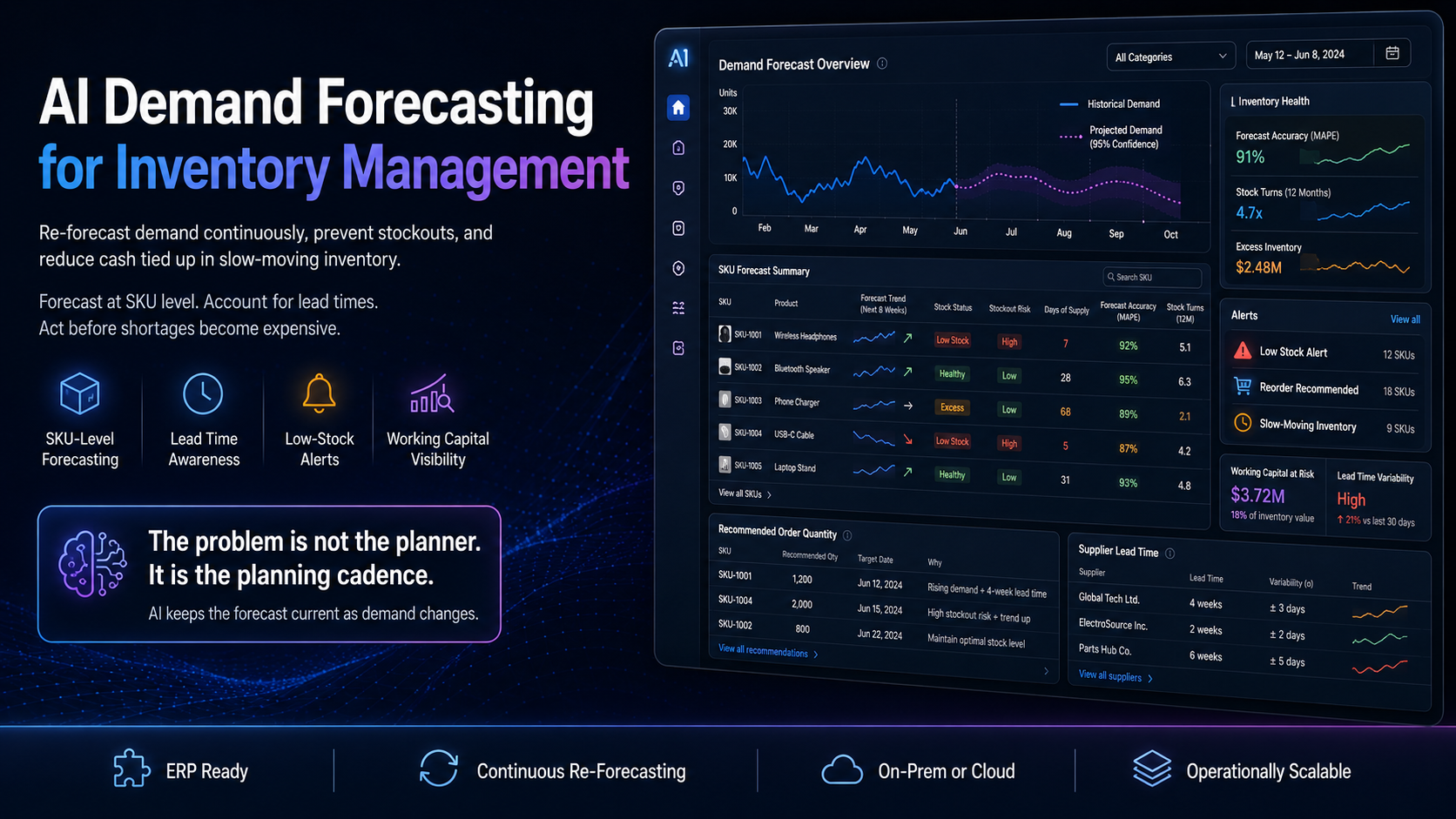
AI Interview Agent: Structured Screening and Identity Verification

Remote hiring created a problem that nobody had to think about when interviews happened in a room: you cannot be certain the person answering the questions is the person who will do the job.
Proxy interviewing, where a stronger candidate sits the interview on someone else’s behalf, has become a recognised problem in remote technical hiring. It is discussed openly in recruitment circles, and the usual detection method is a hiring manager noticing that a new joiner cannot do what they demonstrated at interview, which is an expensive way to find out.
This article covers how an AI interview agent conducts a structured screen, how identity verification works alongside it, and the significant limits and fairness considerations that come with automating any part of hiring.
Watch the demo
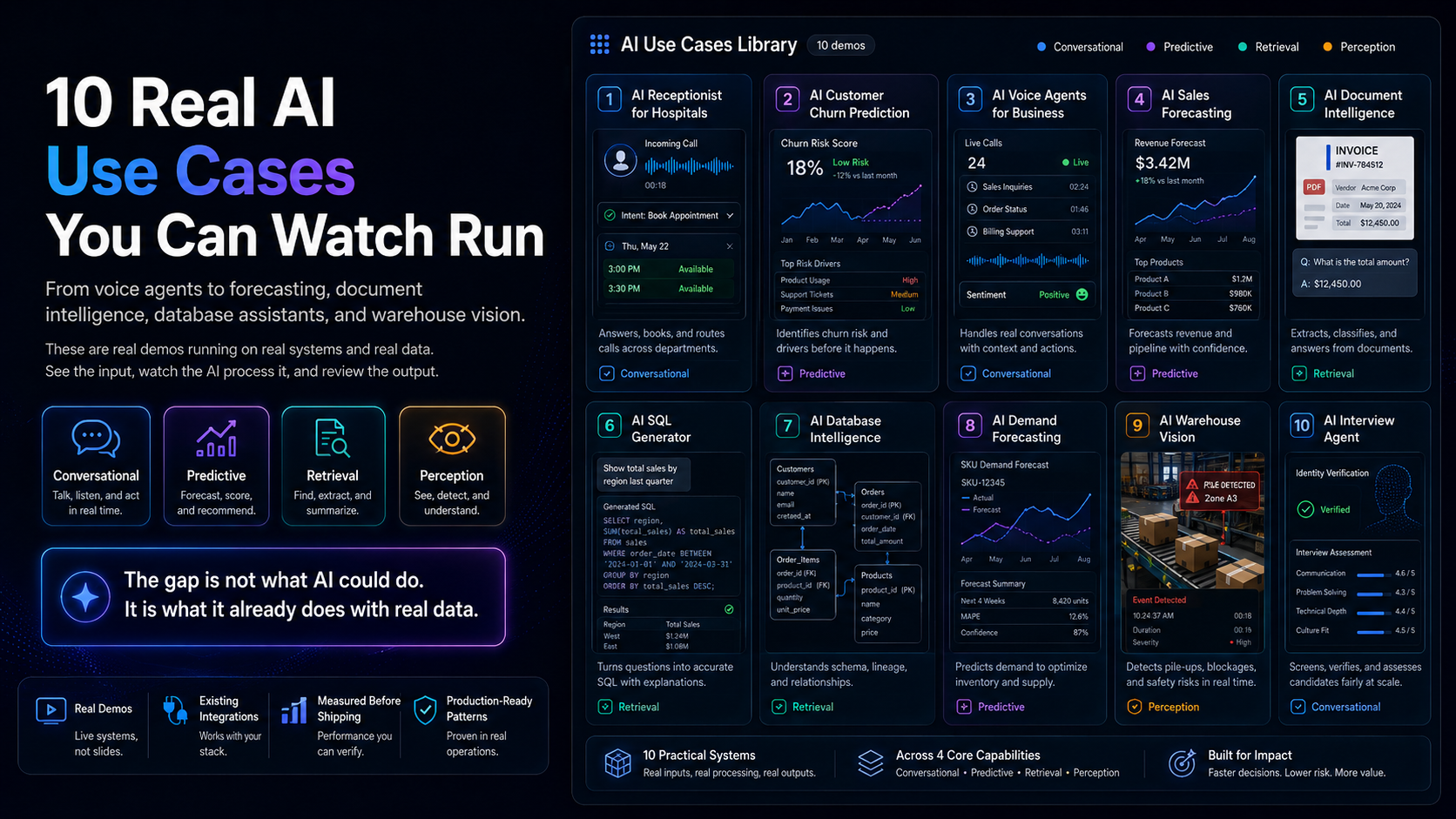
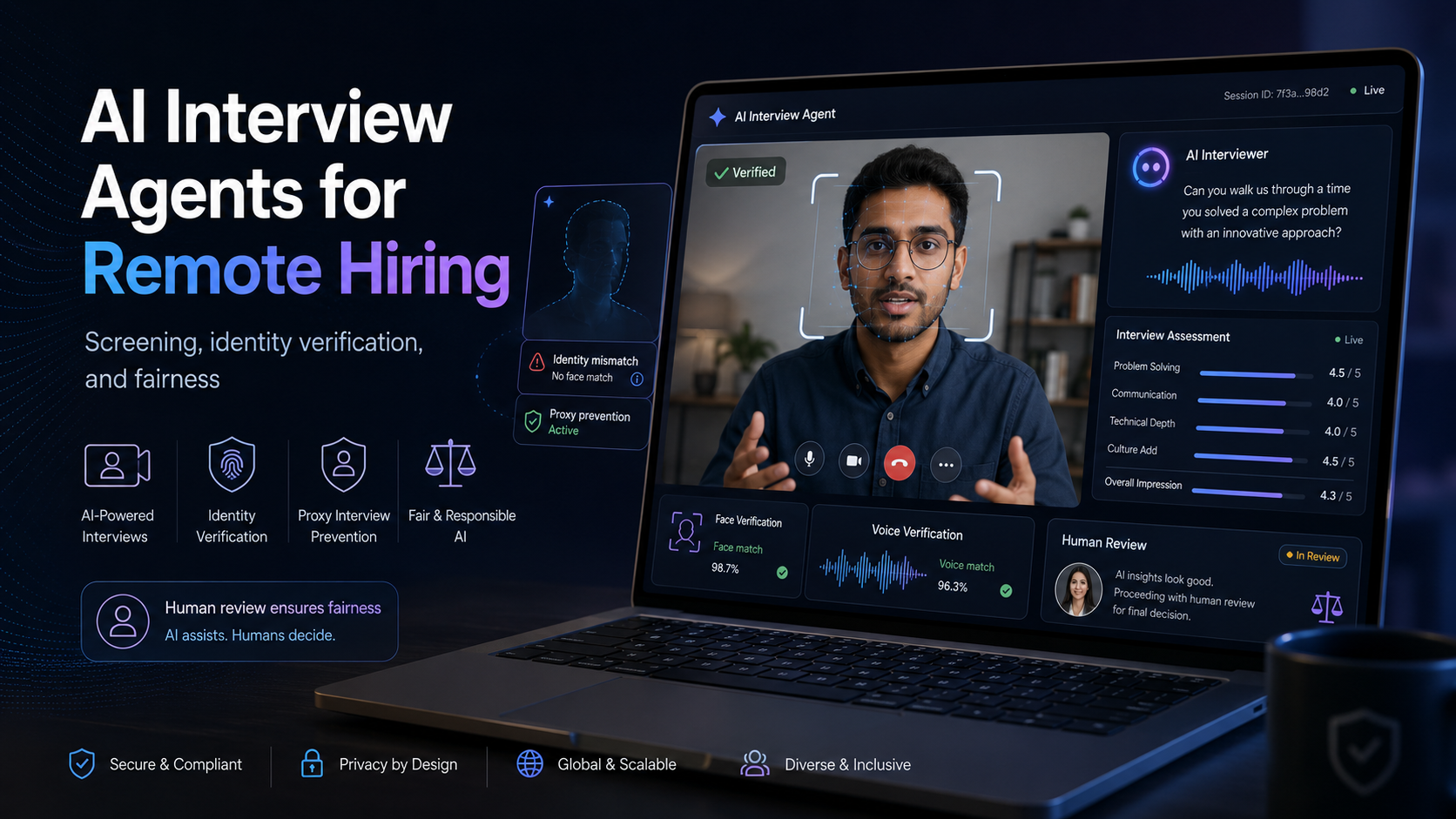
The demo shows a conversational AI conducting an interview, asking relevant follow-up questions rather than reading a fixed list, verifying the candidate through real-time face and voice matching during the session, and producing a structured evaluation instead of a raw transcript.
Two separate problems, one session
It is worth separating these, because they are independently useful and have different risk profiles.
Screening capacity. First-round screening is repetitive and consumes senior time. For high-volume roles, the same questions get asked hundreds of times, and quality drifts as interviewers tire.
Identity assurance. Confirming that the person interviewing is the person applying. This is specific to remote hiring and largely unaddressed by traditional processes.
A system doing both handles the volume problem while closing a gap that the volume problem makes worse, since the more candidates you screen, the less closely any individual is scrutinised.
How the interview side works
1. Structured question set with adaptive follow-up
The agent works from a defined set of areas to cover, but generates follow-up questions based on what the candidate actually says. This is the difference between an interview and a form. A candidate who mentions a specific technology gets asked about it; a vague answer gets probed rather than accepted.
2. Consistent coverage
Every candidate is asked about the same core areas. This is genuinely valuable for fairness, because human first-round interviews vary considerably depending on time of day, interviewer, and how the conversation drifts. Consistency is a defensible property in a hiring process.
3. Structured evaluation output
The output is an assessment against defined criteria with supporting evidence from the conversation, not a transcript for someone else to read. A transcript moves the reading burden rather than removing it.
How identity verification works
Face matching
The candidate’s face on camera is compared against their submitted identity document at the start, and monitored through the session to confirm the same person remains in frame.
Voice printing
A voice profile is established early and checked continuously. This catches the case where the visible person is not the one answering, which is a common variant of proxy interviewing.
Live session checks
Verification runs throughout rather than only at the start, because a check performed once at the beginning is easy to defeat.
Where this needs care: fairness and legal exposure
This is the most sensitive use case we publish, and treating it casually creates real risk. Hiring is a regulated activity in most jurisdictions.
Bias is a live risk. Any system that evaluates people can encode bias from its training or its criteria. This is not hypothetical, and in employment it is legally actionable. Evaluation criteria should be explicit and job-related, and outcomes should be monitored across demographic groups for disparate impact. If you are not prepared to audit for that, do not automate evaluation.
Facial recognition accuracy is not uniform. Published research has repeatedly found error rates varying across demographic groups. In a verification context, a false non-match means a legitimate candidate is flagged as fraudulent, which is a serious harm. Any verification failure must route to human review, never to automatic rejection.
Biometric data is heavily regulated. Face and voice data are biometric identifiers with specific legal treatment in many jurisdictions, often requiring explicit informed consent, purpose limitation, and defined retention periods. This is a legal question to settle before deployment, not a technical one.
Accessibility. Candidates with speech differences, hearing impairments, or conditions affecting presentation may be disadvantaged by an automated format. An alternative human path must exist and be genuinely offered.
Candidates should know. Being interviewed by AI without being told damages trust and, in some jurisdictions, breaches disclosure requirements. Transparency is both the right default and increasingly the legal one.
The machine should not make the decision. The defensible design is that AI screens, structures, and flags, while a human decides. Fully automated rejection is where both the ethical and legal exposure concentrates.
What it is genuinely good for
Given those constraints, the strong applications are:
- High-volume first-round screening, where the alternative is a rushed human screen or no screen at all
- Consistent coverage of the same core questions for every candidate
- Scheduling relief, since candidates interview when it suits them rather than negotiating calendars
- Identity assurance in remote technical hiring where proxy interviewing is a known risk
- Structured records that make the process auditable, which is useful if a decision is ever challenged
What deployment looks like
Six to ten weeks, with more of it spent on policy than on engineering.
Weeks 1 to 2. Define the roles in scope, the evaluation criteria, and crucially the legal position on biometric data in your jurisdictions. Involve legal and HR at the start.
Week 3. Design the candidate experience: disclosure, consent, the alternative path, and the human review route for any verification flag.
Weeks 4 to 6. Build and integrate with the applicant tracking system.
Weeks 7 to 8. Shadow running. The agent interviews alongside the existing process, and outputs are compared against human assessments to check for systematic divergence.
Weeks 9 to 10. Limited rollout with bias monitoring in place from day one, not added later.
The legal and policy work genuinely gates this one. Teams that treat it as an engineering project first tend to build something they cannot deploy.
Related use cases
For conversational AI in a lower-risk setting, AI voice agents for business covers customer-facing calls. On the governance side, our writing on AI governance and scaling teams and human-in-the-loop architecture patterns is directly relevant to designing this responsibly.
Browse everything in our AI use cases library.
Frequently asked questions
Does this replace human interviews?
It should not. It handles first-round screening and identity assurance. Hiring decisions should stay with people, both for quality and for legal defensibility.
Is it legal to use AI in hiring?
It depends on jurisdiction, and the rules are tightening. Several regions now require disclosure, bias auditing, or both. Treat this as a legal question to answer before building.
What happens if verification flags a candidate?
It must route to human review. A flag is a signal to look more closely, never grounds for automatic rejection, because false non-matches happen and fall unevenly across groups.
How do candidates react?
Mixed, and disclosure matters. Many appreciate interviewing on their own schedule without waiting for a slot. Most object to being assessed by a machine without being told.
What about candidates who cannot use this format?
An alternative human path is required, and it should be offered proactively rather than only on request.
How is biometric data stored?
This needs deciding before deployment: what is retained, for how long, and under what consent. In several jurisdictions biometric identifiers carry specific obligations with meaningful penalties for getting it wrong.
AINinza is the AI practice of Aeologic Technologies, backed by over a decade of enterprise engineering. If you are screening at volume or hiring remotely into technical roles, we are happy to talk through what a responsible deployment would look like, including whether the compliance burden makes it worthwhile for you.